


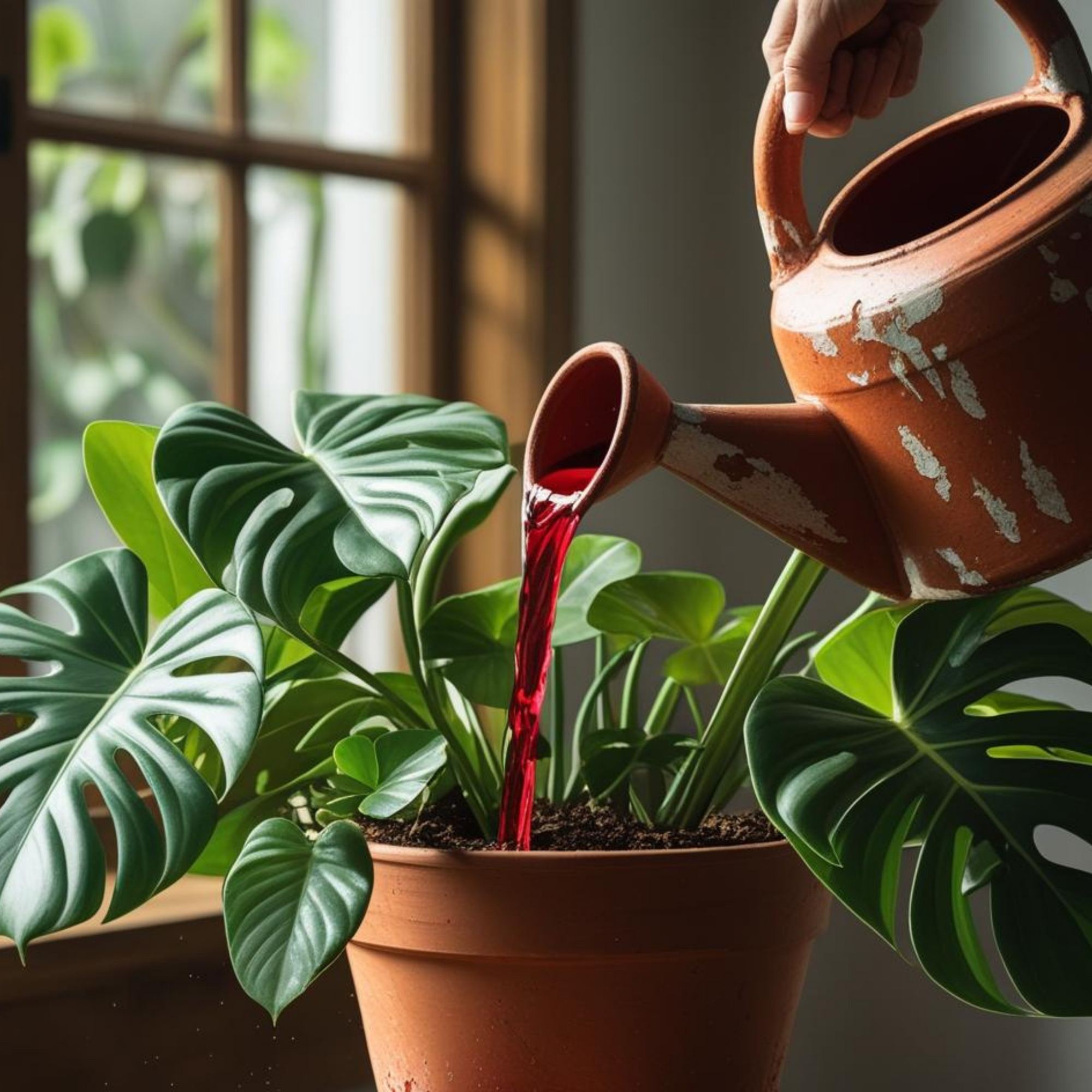
Watering plants with period blood???
Perhaps you've seen some strange post on social media suggesting that you water your plants with your own period blood. And maybe your reaction was: Ew, gross! or Wait, is that even serious? Well, we’re here to say yes, it's serious! You absolutely can use your menstrual blood to water your plants. And it’s not as weird or gross as it might sound. In fact, it’s kind of badass.
So... is period blood really good for plants?
Yes! Menstrual blood is rich in iron, nitrogen, phosphorus, and potassium - those are actually the exact nutrients plants need to thrive. And unlike synthetic fertilisers, your blood is free, natural, non-toxic, and full of life-giving compounds your green friends will love.
To put it bluntly: it’s not waste. It’s nourishment.
Period blood is essentially your body’s way of creating a super lush, nutrient-rich environment for a potential pregnancy every month. When there’s no baby on the way, your body flushes it out. But that doesn't mean it's useless - far from it!
How do you actually do it?
If you use a menstrual cup, this is easy-peasy:
-
Empty the cup into a container (a jar, old water bottle, whatever you don’t mind dedicating to this purpose).
-
Dilute with water. A general rule is 1 part blood to 10 parts water. Don’t skip this step - pure blood is too strong for your plant babies.
-
Water your plants with the mixture. Indoor or outdoor, both are fine. Avoid watering the leaves, stick to the soil.
If you use cloth pads, you can soak your used pad in water, and then use that water for your plants. Again, dilution.
Important: Don’t use blood on edible plants you're harvesting the same day, just to be safe and hygienic.
Wait... but isn’t it unsanitary?
Not really. Menstrual blood is made of uterine lining, blood, and cervical fluid. It’s sterile when it leaves the body. Bacteria might grow if you let it sit out, but if you’re using it right away or within a day or so, you’re good.
Still feeling ick about it? That’s okay. We’ve been conditioned to see periods as “dirty”. But they’re not. This practice is actually a beautiful way to reconnect with your cycle and your environment.
It’s also a low-key way to say: screw the stigma.
Which plants love it most?
Almost all plants benefit from the nutrients in menstrual blood, but especially:
🌿 Leafy houseplants (like pothos, monstera, spider plants)
🌹 Flowers and ornamentals
🍅 Outdoor veggies and herbs (just don’t water on the edible part)
🌵 Even cacti (just avoid watering them too often... stick to their watering schedule!)
Skip very delicate or already sick plants, they may need a gentler approach.
Can I store it?
We’re gonna go with not recommended. Blood is organic material, and like anything organic, it can go off. If you absolutely wanted to store it for a day or two, you'd need to keep it refrigerated and clearly labeled (seriously: no mix-ups).
But honestly? Just water your plants the same day. It’s simpler, safer, and way less weird than storing jars of blood in your fridge.
Will my plants smell?
Nope. Not if you dilute properly. It just smells like slightly metallic water, and once it's in the soil - nothing. If anything smells funky, your dilution ratio might be off or the blood sat too long.
This feels... kind of witchy. Is it?
It totally can be.
Many people who practice earth-based spirituality or just enjoy ritual love using this as a way to honour their cycle. You’re literally giving life to something with your body’s own magic. If that feels empowering, lean into it. If it just feels like a cool science experiment, that’s fine too.
No candles or crystals required, unless you’re into that.
TL;DR
-
Yes, you can use period blood to fertilise your plants.
-
It’s full of good stuff: iron, nitrogen, phosphorus, potassium.
-
Use it diluted (1:10 ratio is ideal).
-
Use it fresh or within a day.
-
It’s not gross or unhygienic, it’s nature.
-
No, it doesn’t smell.
-
You don’t need to be a witch to do it, but it’s totally OK if you are.
💬 Let us know if you try it, and make sure to tag us when you post photos of your lush, blood-fed monstera.